Posts

Showing posts with the label catholicism

the best ideals of our nation

Image
Imagine it: last December, I was watching Christmas movies for this blog. It was nice and pleasant... Well, there was Black Christmas (with a brief venture into Silent Night, Deadly Night , but mostly it was... Nice. There was talk of filmmaking and screenplay structure and Christ-Figures, but mostly it was about how good people can and should be to one another. Or, at least, that is how I remember it. How I choose to remember it. And, the year before, when I was stil watching Groundhog Day every day, I also squeezed in a silly little Christmas film-- 12 Dates of Christmas . This year, I find myself inclined toward more serious fare, toward lengthy rants like the other day . To be fair, December usually includes a lot of the more interesting movies for me since that is when Oscar hopefuls show up in theaters. This year, as well, there is a.... What shall I call it? There is an interesting political climate about in America. Donald Trump is still going strong in his campaign for ...
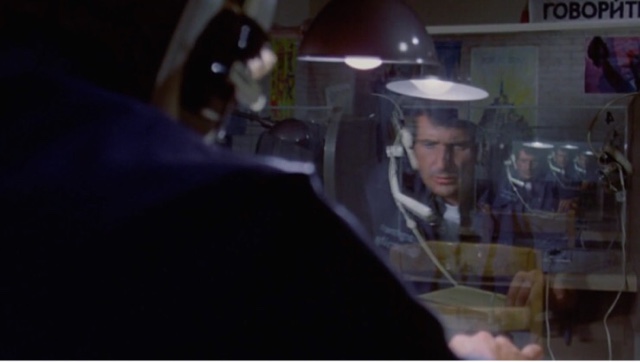
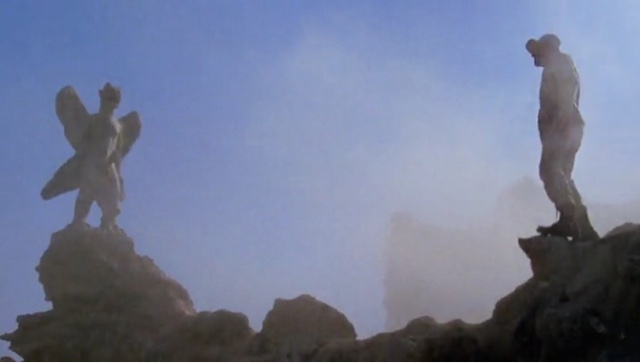
i'm not putting her away

Image
Clover (1992) argues, Certainly, the novelist's (and filmmaker's) target is not the female body, but the transformation that body prompts in the male psyche. Enmeshed from the outset in Karras's spiritual crisis are issues of intimacy and sexuality. Again, Regan provides the palpable field: she stabs a cross in and out of her vagina, speaks incessantly and crudely of sexual matters, is suspected of desecrating the statue of the Virgin Mary, and so on. ...however, it appears to be Karras's own anxieties that are at stake. The nature of those anxieties is hinted at in an early scene [in Blatty's novel] in which Karras is approached for comfort by a young and lonely priest: Of all the anxieties that Karras encountered among the community, this one had lately become the most prevalent. Cut off from their families as well as from women, many of the Jesuits were also fearful of expressing affection for fellow priests; of forming deep and loving friendships. "Lik...

is there someone inside you?

Image
For some reason, every time I watch The Exorcist , I forget that it starts with that sequence at the excavation in Iraq. Of course, the movie is not called The Possessed (though I am pretty sure that I have seen more than one movie with that title); it is not about Regan (Linda Blair) but about Father Merrin (Max von Sydow) and, even moreso, Father Karras (Jason Miller). Something Clover (1992) tries to explain "this gendered division of narrative labor--to understand what it is about the male crisis that needs harnessing to a narrative of female hysteria or indeed psychosis" (p. 70). While Regan's story drives the narrative, the narrative belongs to those two men (and primarily Karras). Man versus the devil. The girl is just their battleground. But, what kind of battleground is she? Kinder and Houston (1987) write about the "psychological interpretation" presented in the film to explain Regan's initial extraordinary behaviour--her parents' divorce ...

in every apartment house

Image
Some of the best horror deals in very down-to-earth details, mundane themes with a twist toward something extraordinary. Rosemary's Baby --today's film--deals in fears about pregnancy and parenthood. The Shining deals in alcoholism and... parenthood. Poltergeist deals in suburbia and... parenthood. I'm sensing a theme. The Omen films also deal with parenthood, and of course, the end of the world (because children are, in a way, the end of the world... Ask any single person.) Ghost stories like Crimson Peak deal in hidden pasts coming back to haunt the present (and that one has almost nothing to do with parenthood). Even the Hellraiser films deal in a sort of fear of the perverse and our own sexual impulses. (And, there's that thing about motherhood .) And, that's just movies I've watched this past month for this blog. How about some more recent fare? It Follows , for example, takes old slasher-film themes about the dangers of casual sex and updates them wi...

the beast has no brother

Image
A few notes: 1. I don't know enough about Vatican II to really speak to the (apparent) decline of Catholicism in the late 1960s and the 1970s. Longtime reader of this blog, Mal, offered some insight in the comments on yesterday 's entry--he described the sense of it as "either lots of priests, nuns, theologians and laymen throwing off the shackles of dogma and tradition, or else a mass submission on the part of Catholics to the fashions of the surrounding culture" and there was "a sense of disorientation and anxiety." 2. I do know plenty about the counterculture, especially in America, and the impression it had on the older generations. (Brag: I'm published on the subject.) And, I can attest that many of the changes going on in America at the time--the pill giving a nice jumpstart to the sexual revolution, for example--created that same "sense of disorientation and anxiety." The Los Angeles Times , 24 November 1968, called Middle Class Ameri...