Posts

Showing posts with the label counterculture

from a certain point of view

Image
And, of course, as I've said with the previous Star Wars films, Return of the Jedi put me on the side of rebellion. The powers that be get a little too authoritarian, you band together and revolt. For the record, I jumped over to watching Return of the Jedi tonight after watching a CNN Town Hall about gun violence and school shootings. [And, throughout much of the film, there was a conversation going on in the next room about a lot of this stuff, too.] Future readers--on Valentine's Day, just one week ago, a 19-year-old expelled high school student returned to his school with a gun and killed 17 students and teachers and wounded 14 others. Surviving students have been rather outspoken, and if you don't know what side of this issue I come down on, you probably have not been following this blog; I do tend to get into political rants from time to time even under the guise of talking about movies because movies are inherently political, even if only to reinforce (or reject...
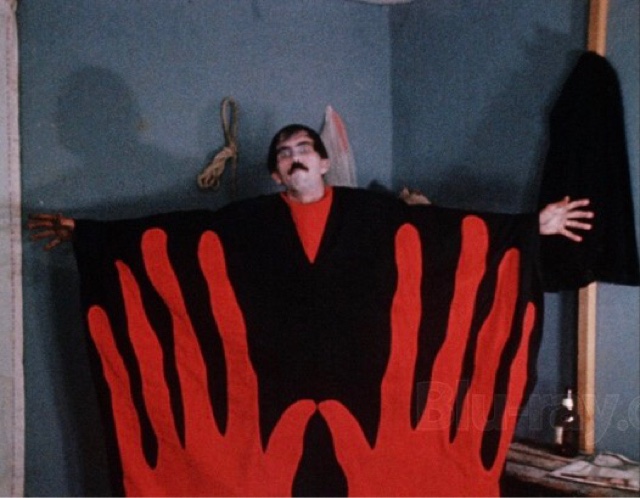
how many times do we have to chase you kids?

Image
From the Los Angeles Times , April 9, 1967: "Hippies... many officials see them as a serious threat to today's young people." In 1963, counsellors and campers at were run off from a summer camp outside Rosman, North Carolina after "'Hate literature was distributed around [the nearby] town saying some very untrue things about the camp--that we were sex perverts, Communists and God knows what else,' [camp counselor Bruce] Grund said" (NYT, 1963). In 1964, Reverend Frederick C. Wood, Jr. stirred up controversy when he suggested that sex was a "good." "Premarital intercourse need not be 'bad' or 'dirty,' he said. 'Indeed, it can be very beautiful.' (NYT, 1964). In 1959, Leo F. Koch, an assistant professor of biology at the University of Illinois was dismissed from his position after purportedly condoning premarital sex. Koch wrote a letter to the school paper, which included this: With modern contraceptives and medi...

in every apartment house

Image
Some of the best horror deals in very down-to-earth details, mundane themes with a twist toward something extraordinary. Rosemary's Baby --today's film--deals in fears about pregnancy and parenthood. The Shining deals in alcoholism and... parenthood. Poltergeist deals in suburbia and... parenthood. I'm sensing a theme. The Omen films also deal with parenthood, and of course, the end of the world (because children are, in a way, the end of the world... Ask any single person.) Ghost stories like Crimson Peak deal in hidden pasts coming back to haunt the present (and that one has almost nothing to do with parenthood). Even the Hellraiser films deal in a sort of fear of the perverse and our own sexual impulses. (And, there's that thing about motherhood .) And, that's just movies I've watched this past month for this blog. How about some more recent fare? It Follows , for example, takes old slasher-film themes about the dangers of casual sex and updates them wi...

the beast has no brother

Image
A few notes: 1. I don't know enough about Vatican II to really speak to the (apparent) decline of Catholicism in the late 1960s and the 1970s. Longtime reader of this blog, Mal, offered some insight in the comments on yesterday 's entry--he described the sense of it as "either lots of priests, nuns, theologians and laymen throwing off the shackles of dogma and tradition, or else a mass submission on the part of Catholics to the fashions of the surrounding culture" and there was "a sense of disorientation and anxiety." 2. I do know plenty about the counterculture, especially in America, and the impression it had on the older generations. (Brag: I'm published on the subject.) And, I can attest that many of the changes going on in America at the time--the pill giving a nice jumpstart to the sexual revolution, for example--created that same "sense of disorientation and anxiety." The Los Angeles Times , 24 November 1968, called Middle Class Ameri...

what could be wrong with our child, robert?

Image
The Omen again. That whole parenting thing--leave that to the side for the moment. But, not too far to the side. The changeling child idea--central to the premise of the film-- does tie back into the parenting. But it also suggests a larger notion of fear of the unknown, specifically fear of foreign unknowns, of foreign influence. I mean, this film puts us in the realm of international politics at the start. Robert Thorn is made the American ambassador to the UK not long after he and his wife get Damien in their lives. Father Brennan points Thorn and Jennings to Italy and then Israel to find, far from the modern trappings of the Thorns' life in England. Seriously, compare the excess of Damien's fifth birthday party to the ruins seen in Israel later in the film. But, the real danger here is in the child influenced by... maybe it's foreign powers, maybe just belief systems to which we do not subscribe ourselves. I was wondering why certain religious themes were promine...

they stick out in all different directions

Skip past "Girl" and jump into "Hold Me Tight" and you wouldn't necessarily take Jude as the lead character here. That song juxtaposes not really Lucy and Jude but Lucy and Molly (Jude's girlfriend in Liverpool). Plus, the American Bandstand style of Lucy's high school dance and the club scene (with Beatles stand-ins) in Liverpool. The film starts us with these two worlds clashing not because the film will necessarily be about that , but because the film is about various cultures colliding, breaking, and exploding. Hell, just now as I typed that, an army truck full of soldiers drove past the football game where we meet Prudence. The nice wholesome high school scene--about to be interrupted for us by the introduction of homosexuality--is first interrupted by that army truck. And that interruption is a pleasant one. The army guys whistle at the cheerleaders, the cheerleaders and football players cheer on the army guys. The movie does not play for us the ...