Posts

Showing posts with the label family

not such a bad place to go
Image
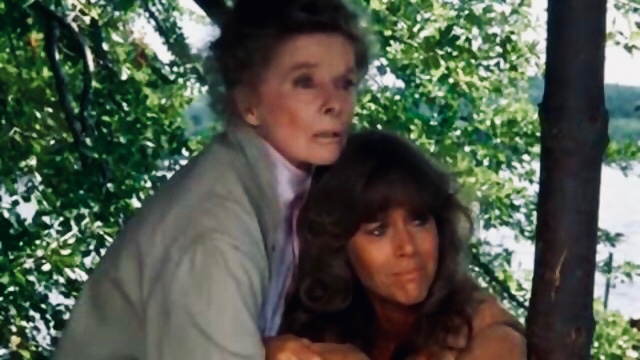
So, the structure could use some work, but the performances are amazing. That's the short version. Roger Ebert writes in his review about leaving "the theater feeling good and warm, and with a certain resolve to try to mend my own relationships and learn to start listening better." On Golden Pond is mostly the tale of an old couple, still adorable with one another, and the "grandson" they take in at their lakeside summer home. The father/daughter stuff is there, mostly under the surface, but it's almost apt-- almost --that it remains off to the side, not quite... there. Because, that's how it is for Chelsea and, especially, for Norman. For Chelsea, her problems with her father are deep-seated, so much a fundamental piece of who she is (especially when she comes back to Golden Pond) that it makes sense she has trouble talking about it, expressing it, confronting it. For Norman, his failing memory can't help matters. Plus, he doesn't even realiz...
and yet, here we are

Image
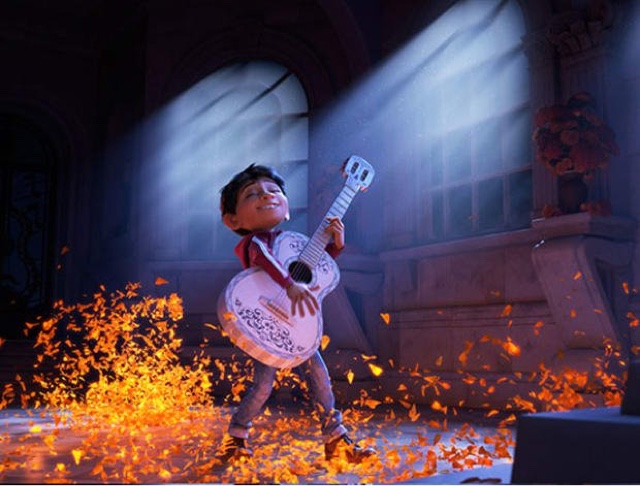
No childhood film today. Busy day of kitchen cleaning and map drawing. I did see a movie today-- Coco . Not sure if it was great. It was good, and definitely affecting. And it had an interesting message--combining both the idea that you should follow your dreams and family is important. In context, these feel like two different directions--SPOILERS--for a good portion of the film, but then they pull together and it all gets wrapped in a little bow. And, it got me thinking about family. Now, on the one hand, I haven't spent much time with most of my family in the past year. I'll be honest about that. The likelihood to get into a political argument has made hanging out with them less appealing. I'm talking about my parents, some of my sisters. But, it's worth noting that, for example, in many of the fictional stories I have written over the years, family was something constructed more than inherent. You choose family like you choose friends. Except you don't reall...

precious seconds are ticking away

Image
The thing about Murder by Death is that 1) it offers up a group of intelligent characters, capable of Sherlock Holmes-style deductions out of nowhere-- (For the record, even though I know better, when Dick Charleston asks about Marcel recovering from his accident, I assume he's talking about Marcel getting hit by the gargoyle that was pushed off the roof not ten screen minutes before. But, no, he's talking about some previous injury, and references the sound of Marcel's artificial hip, which WE CANNOT HEAR. Considering the Charlestons were also attacked with a gargoyle, it should be even more obvious that Marcel was injured. But, no, it's a previous "accident" with a car.) --but also just dumb (if that's the word) enough to be so wrong about their guesses about the larger situation, particularly those at the end of the film, after Twain has essentially tried to kill them all in their rooms. 2) They, Sam Diamond especially, are capable of being sexist ...

no reason to put the guns on the table

Image
To be fair, I wasn't really there in the 70s. I mean, I was, but I was an infant, a toddler, I wasn't making movie-watching decisions just yet... Well, not really. But, I certainly didn't know why certain movies were the ones making money at the time. My experience with all of these movies so far this month came later mostly. Get to the 80s and I was plenty aware then (and in retrospect as well) why things were the way they were in popular cinema. But, I'm not above speculation, obviously. Plus, I am capable of research. For example, disaster films were big--the Airport series, The Poseidon Adventure , Earthquake , The Towering Inferno , Meteor . James Bond films were in full swing with Connery and Moore. Crime was big-- The French Connection , Dirty Harry , The Godfather and its Part II , Death Wish , Serpico , plus the wilderness movies, of course. JT Esterkamp at Medium , says "The films [of the 1970s] would be a reflection of the anti-hero as a protagonist....

when we reach civilization

Image
Let's get a couple things out of the way: 1) the gambling at the end of Across the Great Divide , unless we are supposed to assume Zachariah is cheating, is bullshit. It's cheap and convenient stacking of cards so both have good cars and Zachariah wins. It's the kind of thing a lot of movies do, actually. Nevermind the way poker actually works, the way players actually bet, the way you're not going to be betting horses after like one hand; 2) the song that plays as the men try to kill Zachariah at the beginning of the film is awful; so are many of the obviously-written-for-the-film songs that play and; 3) even worse, there is a moment when they've been at the native camp for a bit where the kids run in slow motion with some cougars and that same stupid running-with-animals music from Adventures of the Wilderness Family plays and for a moment, it's like one movie is the other, and not in a good way, because I think this movie is actually better. Some moments a...

i don't need a book to know about myself

Image
20th Century Women begins with an aerial shot of the ocean, then a subtitle: "Santa Barbara, 1979." Importantly, that subtitle includes the period. Narration immediately connects the present to events in the past, Jamie's father, Dorothea's husband, their marriage, his car, their divorce. Other bits of narration and voiceover later will put various characters into the context of their history but even more, late in the film, we are offered specific facts about the future lives of these characters. That the title references the time period is no mistake, of course. This is about a specific time, a specific place, geographically as well as metaphorically within these lives. This is where Jamie and Dorothea and Abbie and Julie and William are at this moment. This is what their lives are like now . Now being 1979, of course. Summer. The film even begins on Dorothea's birthday. She is turning 55. Jamie tells us about her life so far. Later, Dorothea will tell us abo...

to share my life with you

Image
20th Century Women offers up multiple narrators and the convergence of several stories. A mother. A son. Their tenants. His girlfriend (of a sort). The mother, Dorothea (Annette Bening) tells the story of the son, Jamie (Lucas Jade Zumann) and vice versa. Others tell their own stories, though not in the same kind of voiceover. (Mike Mills trivia note: the family name here, Fields, is the same as in Beginners .) Dorothea has a fairly open-door policy about the house. She invites a fireman over to her birthday dinner, for example, after he helps put out their car fire. The girlfriend, Julie (Elle Fanning) comes and goes as she pleases, even when Jamie is not home. Dorothea asks Julie and Abbie (Greta Gerwig) to help her raise Jamie as a good man. (Then, interestingly, she tells Jamie that she asked them.) Though it's a common theme, it's done especially well--these people form a family even though they are not all related. Jamie tries to spread his wings with friends, but k...

this madhouse is my home

Image
August: Osage County offers us pseudo-voiceover to start. Bev (Sam Shepard) is talking to, as it turns out, Johna (Misty Upham) who is hiring to help him out--he's getting old. But, she's offscreen until he's stopped talking, until Violet (Meryl Streep) interrupts. It's a cheat. There will, of course, be no voiceover for the rest of the film. Then Bev leaves and the play gets going. And, it is a play, or was. Only a few scenes early on are really staged differently than they would have to be on stage. This is a talky film, the kind of movie that brings a big ol' family together and lets the sparks fly. Give us a family, throw in a funeral or a wedding or a holiday and the drama writes itself. I saw this two years ago, of course, when Julia Roberts and Meryl Streep were nominated for Oscars, but I actually don't remember much of the specifics anymore. In my head, it's filed away with the likes of The Celebration or Rachel Getting Married , or even Home for...

children can be pretty harsh when it comes to their parents

Image
But , Into the Wild doesn't really romanticize Chris McCandless. At least no more than it detracts from that same romanticism. We begin with a mother in pain. Billie (Marcia Gay Harden) sits up from sleeping because she has heard her son's voice. Of course, he is not there. He's been gone for two years, with no contact. The film even reduces his contact; in reality, Chris sent his grades home from Atlanta before leaving. There was a note attached: Here is a copy of my final transcript. Gradewise things went pretty well and I ended up with a high cumulative average. Thank you for the pictures, the shaving gear, and the postcard from Paris. It seems that you really enjoyed your trip there. It must have been a lot of fun. I gave Lloyd [Chris's closest friend at Emory] his picture, and he was very grateful; he did not have a shot of his diploma getting handed to him. Not much else happening, but it's starting to get real hot and humid down her. Say Hi to everyon...

an amalgam of the dna passed on to me

Image
“Family is undeniably inescapable. Like a silent shadow, it’s your blood, your roots, and (at times) your ball and chain.” So begins Meredith Alloway’s review of Stories We Tell for The Script Lab . In the terms of these last few blog entries (today is Day 5 with Stories We Tell ), family is those people who are telling a story that keeps weaving in and out of yours. They are the people who have a bigger investment in your story than other people do, and vice versa, you have an investment in theirs. Whether by blood or by circumstance, family is, as Anderst’s piece on the film, suggests the storytellers here are, a chorus of voices, each telling a variation on a motif of the heart of the story. I’m reminded of words outside my own language as ways to conceive of family. One you might know from Lilo & Stitch if you’ve ever seen it— ‘ohana . On that show, they liked to say that ‘ohana means family, ‘ohana means no one gets left behind. (That word might be a relatively recent...

the ambiguity of the parentage

Image
I'm reminded of a line I said way back on Day 69 - i don't even have to floss --back in the Groundhog Day phase of this blog-- He isn't just an everyman because he represents each of us. He's an everyman because he represents all of us. But, I get ahead of myself by getting behind myself. What is absent from a great deal of Stories We Tell is Sarah Polley herself. She is present in the majority of scenes in the film (only absent from the past footage that is genuine) but here story is not a part of Diane's story. Now, Acts Two and Three of the this documentary turn this into a story that is very much about Sarah instead, about her parentage and what that means for the bigger story of Diane. It was the weekend of Sarah's 11th birthday that her mother died. Eleven years old, her mother dying from cancer--there is no way that Sarah cannot remember it. It is acknowledged within the film that Sarah did not know that her mother was dying when her older siblin...

when you're telling it to yourself

Image
Because I'm sure many have not heard of it, let alone seen it, I must explain: Stories We Tell is a documentary about a mother, about a family, about the way we re-create memory in the telling of it, about how we decide what is history and what is not. Future thesis-writing me (sometime this summer probably), will appreciate the following. This is a reflection of everyday life; we pick and choose the moments within our past to hold onto, we pick and choose the people in our lives that matter and those worth forgetting, we pick and choose what parts of our personalities to express and which to hide away where no one else can see it, and we pick and choose the face we put on, the clothes we wear, the words we say. In other words, we invent ourselves as an ongoing process. You do it. I do it. Life is a story we are constantly telling and retelling until, we hope, we get it right. Of course, there is no right . There's just the way it is. Right off the bat, I must say of Storie...

i don't want to spend the holidays dead

Image
The thing is: he didn’t. Let me back up. The final line in Christmas Vacation is Clark saying, “I did it.” But, really, he didn’t do much of anything. He went to get the tree, forgot a saw, got the tree home, put part of it inside and broke a couple windows. He wanted to prove Santa was real to his niece but even if she thought that plastic Santa flying through the air was the real thing, he didn’t do that. He put up those 25,000 bulbs but without his wife flipping that switch there never would have been any light to them. He only got his Christmas bonus because Eddie kidnapped his boss. Clark accomplishes pretty much nothing in this movie. Even his freak out results not in him getting violent (like in the original) but Eddie. Hell, he breaks a hole through the “floor” of the attic yet doesn’t climb down through it to get out. Instead, he sits in the attic and reminisces about old times that don’t really exist. That last bit is kinda the point, though. Christmas here, is just a...

resolving differences and seeing through the petty problems of family life

Image
Weird trivia found on IMDb : there were only two Christmas-themed movies released in theaters in 1989, this one and Prancer (and Johnny Galecki was in both); and there were three movies with animated openers that year— Honey, I Shrunk the Kids , Troop Beverly Hills and this one. The animated opening is odd. On the one hand, it gets us in the mood for a little irreverent and cartoonish humor. But, on the other hand, it, in my opinion, distances the film from Santa by injuring him and sending him flying away in a hurry. But, maybe that’s a) accidental (or at least incidental) or b) entirely on purpose to give National Lampoon some breathing room. After all, Santa doesn’t really appear in this movie except a little plastic version that Clark kicks in the face. This movie leaves Santa to the side—except for Clark’s conversation with Ruby Sue and the flight of Santa and his reindeer at the end of the movie—for something... else. Strangely, this movie does not deal as much in family dis...

the warm embrace of kith and kin

Image
Considering Clark Griswold was supposed to be a little more forceful at Wally World and hijack the plane home in the original film (before details were changed), his aggressiveness on the road at the start of National Lampoon’s Christmas Vacation fits the character. It’s not in any way a realistic take on a human being but for Clark Griswold it makes sense. He’s more of a cartoon character. But, I don’t want to start my week of Christmas Vacation getting into Clark’s character, though I may get into that later; I want to talk about Christmas movies. About Christmas. About meaning. Home Alone is a modern classic among Christmas movies, but it’s barely about Christmas; it just happens to occur around the holiday. Even more so, Black Christmas . The question then is what is Christmas about and, more importantly, what should a Christmas movie be about? Let us jump past the obvious Christian aspects and the obvious pagan aspects to deal with something I think is bigger: capitalism...

i wish i had it all on tape

Image
I wish I had more home movies. I have a few, but the video camera I had when my kids were small was broken and its battery would never work; it only ever worked when plugged into an outlet. So, it was not very mobile. There are plenty of photos, but I can imagine being Henry Larson sitting in the den (not that I have a den now or expect to have one when I am an old man) watching old home movies. Someone posted an updated version of Frans Hofmeester’s video of his daughter Lotte on Facebook earlier today. He filmed her every day for 14 years now (the previous version going around was 12 years, and it was in a cellphone commercial so it got a lot of visibility), and it is a remarkable pseudo-time lapse of growing up. Here is the video . (Embedding videos in this blog just does not work anymore, and I do not know why.) I think the reason Home for the Holidays works so well is that it provides a rather universal snapshot of an American family celebrating Thanksgiving. The personality...